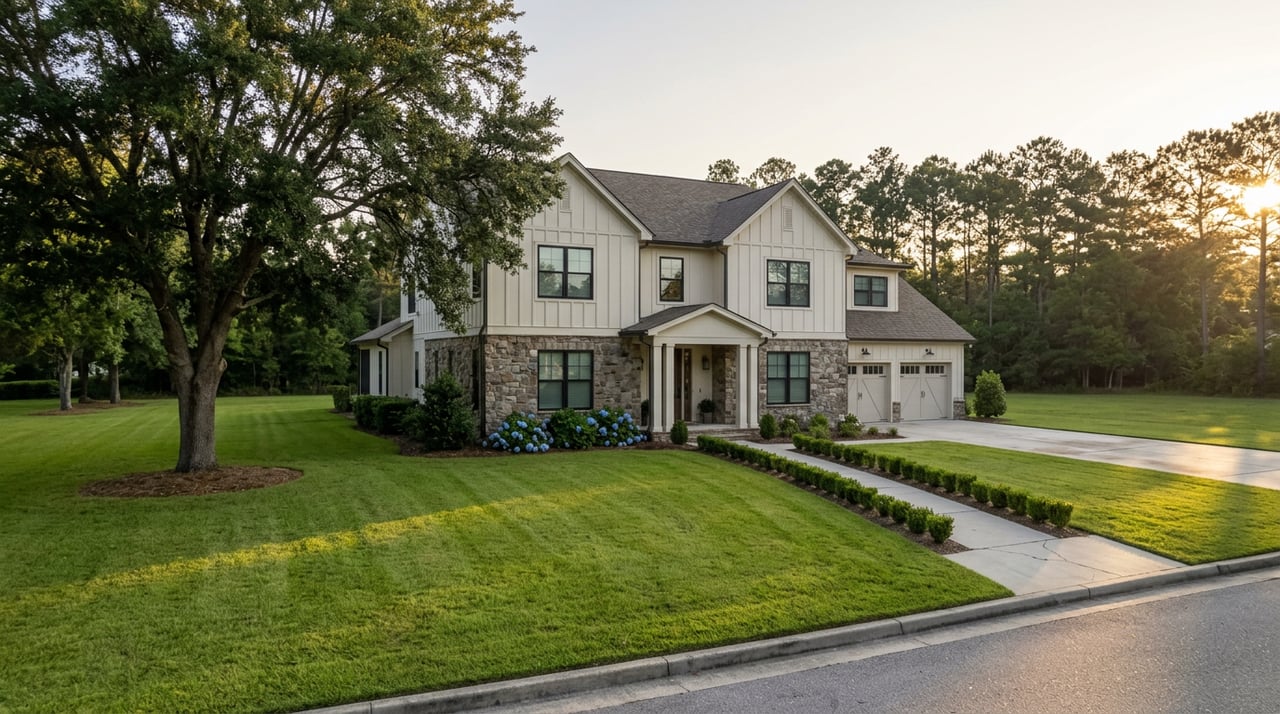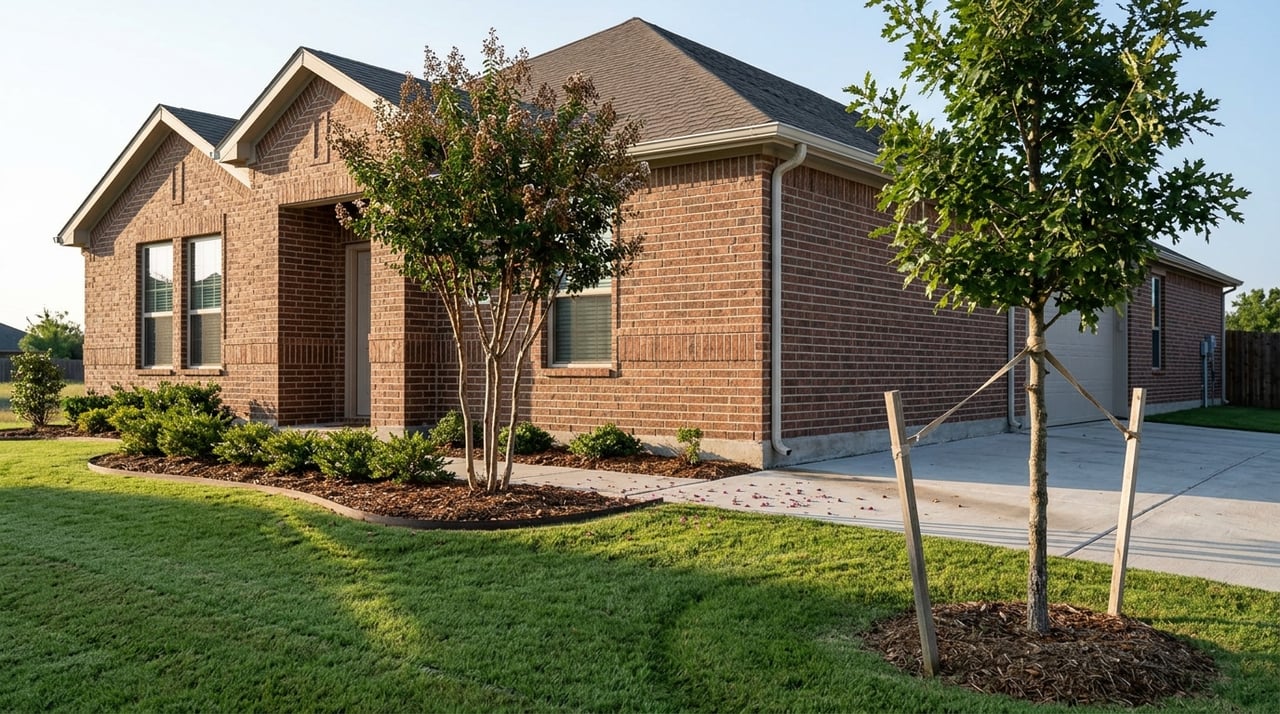
"Right now, there's not a good way to get across any further south than Skyland." That's Tuscaloosa County Commission Chairman Rob Robertson, describing the Highway 69 South corridor at the county's State of the Community event this month at the Bryant Conference Center. He wasn't complaining. He was explaining why a new connector road linking Highway 69 and Highway 82 further south in the county is now an approved project.
Approved and built are two different words along this stretch of Tuscaloosa County, and the space between them is what a buyer comparing new construction South of Town against its older, established streets actually needs to understand before writing an offer.
The visible story here is easy to tell. New subdivisions keep opening off 69 South. A tired shopping center at Skyland and McFarland has a $25 million redevelopment in the pipeline. Prices still run below what you'd pay downtown or on the lake. What doesn't show up in a listing photo is the sequencing problem underneath all of it: subdivisions get approved through a single county commission vote, while the roads meant to carry the traffic those subdivisions create move through a separately funded pipeline that can sit without a start date for years. That mismatch is already sitting in the public record, and it explains more about what you're paying for South of Town right now than the median price does.
The Vote That Showed the Split
In September 2025, Tuscaloosa County commissioners approved phase three of the Greymont subdivision off Highway 69 South, after tabling the vote a week earlier and hearing months of comment from both sides. The opposition wasn't asking for the project to be killed. They wanted larger lots so fewer homes would go in. Monroe Payne, speaking for existing Greymont residents, told commissioners before the vote: "I guess I'm going to tell you we're conceding. We're going along with your wishes and grants today. But I still want to go on record and say that Greymont is opposed to this size development."
The density concern wasn't just aesthetic. Some residents pointed to overcrowding at nearby schools, and they weren't inventing the problem. Tuscaloosa County Schools Superintendent Dr. Keri Johnson has said publicly that schools in the Big Sandy area, which sits along this same 69 South growth line, are at capacity, telling reporters, "Our schools are at capacity and we have reached our limit as far as funding in what we can do to build new buildings." County planning officials have since discussed adjusting minimum lot sizes specifically to manage how fast new density gets added to this corridor.
None of that is a statement about any particular school. It's a capacity and timing problem, the same kind that shows up with roads, and it's worth knowing before you buy into a subdivision that's still adding phases.
The Road That's Still a Line on a Public Notice
The connector road Robertson referenced isn't new. It's listed on the Tuscaloosa County Road Improvement Commission's project page as the SR-69 South and US-82 Connector Road Project, led by ALDOT. Public involvement meetings were held back in September 2023, with the comment period closing that October and an additional online comment window that ran through May 2024. The project letting, the point at which construction actually gets scheduled and funded, is still listed simply as TBD.
"This new connector road is an approved project that's in the works and will help traffic flow in the southern part of the county in those growth areas." — Rob Robertson, Tuscaloosa County Commission Chairman
A second, smaller project sits right at the corridor's main pressure point: the intersection of Highway 69 South and Skyland Boulevard, where an estimated 20,000 vehicles pass through daily. ALDOT spokesman John McWilliams described the plan at a June 2026 public meeting at Skyland Elementary School as adding turn lanes and improving signal timing to help mobility and safety. Robertson, speaking two months later, said work there is only "beginning soon." Two separate projects, both meant to relieve the same growth pressure, both still without a construction date attached, while the subdivisions they're meant to serve keep clearing votes.
Meanwhile, the Retail Money Already Moved
Private capital wasn't waiting on ALDOT's timeline. The aging Wright Plaza South at Skyland and McFarland, home at the time to a Fresh Value grocery, a Walgreens that closed in 2025, and a Pizza Hut that had reopened as a wings restaurant, was announced in 2025 as the site of a full redevelopment led by longtime property owner Michael Whitworth, with CBRE Group handling the leasing. District 7 Councilman Cassius Lanier described the project, paired with a separate effort called Project Encore, as work that would "change the whole face of District 7," and pointed to Culver's and other new-to-market restaurants coming to the area. He also said he was looking forward to city streetscaping upgrades along Skyland Boulevard, though by his own account those were likely years off.
That's a different kind of bet than a road project moving through a public funding formula. Retail developers are pricing in the rooftops that already exist, not waiting for the infrastructure that's supposed to catch up to them. For a buyer, it means the restaurant and shopping options near the corridor are likely to keep expanding on their own timeline, separate from whether the connector road ever gets a letting date.
What the Price Gap Is Actually Pricing In
Tuscaloosa County's median sales price reached $277,400 in March 2026, up 7.1% from a year earlier, according to the Tuscaloosa Association of Realtors and Alabama Center for Real Estate residential report. New construction, which accounted for roughly a fifth of everything that closed that month, carried a median of $319,900. Countywide inventory that same month was up 20.4% year over year, with 2.9 months of supply on the market.
A quick look at where that gap sits:
- County median sale price, March 2026: $277,400
- New construction median, same month: $319,900
- Inventory growth, year over year: up 20.4%
- Months of supply: 2.9
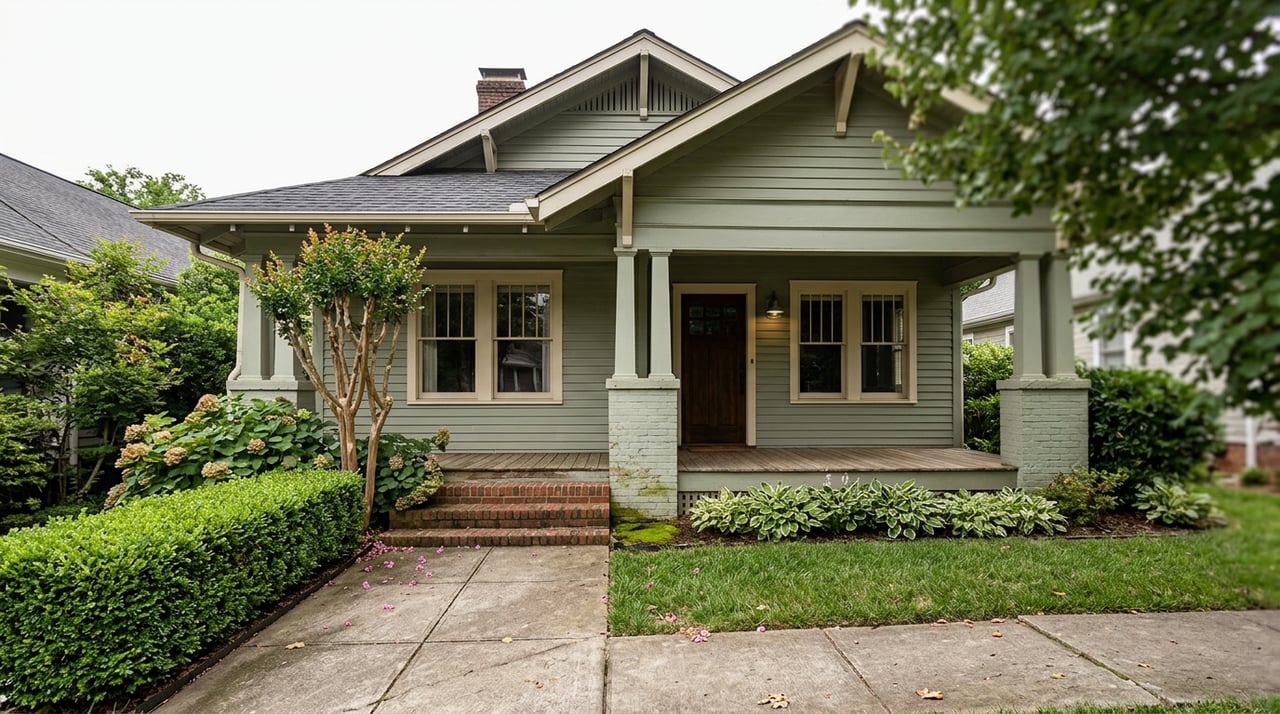
Established South of Town neighborhoods like Remington and Laurel Wood, both near Hillcrest High School and Shelton State Community College, sit close to shopping and restaurants that are already open and roads that are already built. Buying there, you're paying for finished infrastructure. Buying new construction further along the corridor, closer to where subdivisions like Greymont keep adding phases, means part of that $319,900 is a bet: that the connector road eventually gets a letting date, that the Skyland and 69 intersection moves from tentative to funded, and that the retail already underway keeps pulling more of the corridor south with it.
Questions Worth Asking Before You Sign
If you're looking at new construction along this stretch of Highway 69 South, a few questions will tell you more than the floor plan will:
- Is the subdivision built to its original lot sizes, or a revised plan, given that county planners have discussed adjusting density specifically on this corridor?
- What's the current daily traffic count on the road serving the property, and does it run through the Skyland and 69 intersection that's still listed as tentative?
- Is the nearby retail you're picturing already open, or only announced? Right now this corridor has more announced square footage than finished square footage.
- Which school zone does the property fall in, and is there a facilities plan attached to it? That's a capacity and timing question, not a quality one, but it affects how the area develops around you.
None of this makes South of Town a bad buy. It makes it a corridor where the calendar matters as much as the square footage. A subdivision that looks identical to one built five years ago in Remington can carry a very different set of open questions about the road in front of it and the intersection at the end of it.
If you're weighing new construction south of town against something already established, Caitlin Tubbs Wilson can walk you through which streets sit closest to finished infrastructure and which are still waiting on the same projects everyone else is waiting on. Start your real estate journey with a conversation grounded in what's actually funded, not just what's advertised.